
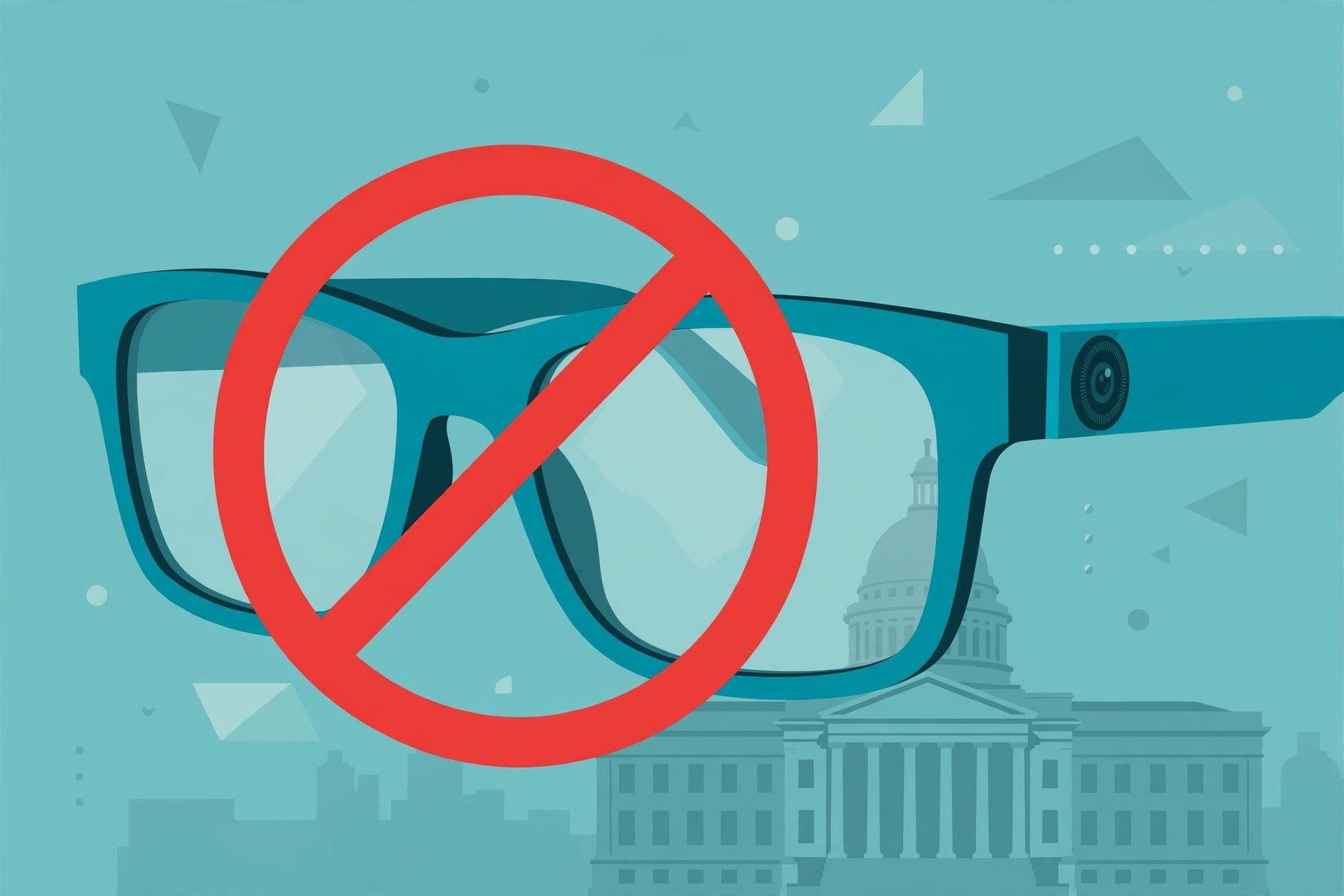
Imagine you are sitting in a restaurant in Lahore with your family. Across the table, a stranger is wearing ordinary-looking spectacles. Nothing unusual — until you realise those glasses have a tiny camera in the frame, and they may have been photographing you, recording your conversation, or even live-streaming you to the internet for the last twenty minutes. You would never know. There is no red light, no shutter sound, no phone held up to give the game away.
That quiet, invisible threat is why, around 20 October 2026, the Punjab government imposed a 30-day ban on the sale and use of camera-equipped smart glasses across the province. Only authorised law-enforcement personnel are exempt. The government's notification spoke of "immediate preventive action ... to ensure public safety, integrity and dignity of persons particularly women and children." The ban did not come out of nowhere — it followed a public-interest petition before the Lahore High Court that has been building for weeks, and a 15 October hearing at which the Chief Justice summoned the country's top bureaucrats in person.
This article explains what smart glasses are, what the ban covers, the constitutional case before the Lahore High Court, what the law already says about secret recording in Pakistan, and — practically — what this means for you whether you own such glasses, sell them, or simply worry about being filmed without knowing.
What Are Camera-Equipped Smart Glasses?
Smart glasses — the best-known example being the Meta/Ray-Ban AI glasses — look like ordinary spectacles or sunglasses. But built into the frame are:
- a camera that can take photos and record video;
- a microphone that captures surrounding audio;
- in newer models, AI features and live-streaming capability, so what the wearer sees can be broadcast in real time.
The danger the petition identifies is not the technology itself but its invisibility. When someone holds up a phone to film you, you can see it, object, walk away, or call for help. When the camera is hidden in a pair of glasses, none of those defences exist. A person can be photographed in a private moment, recorded in a sensitive conversation, or streamed to strangers — and never know it happened.
The petition before the Lahore High Court argues this is not a hypothetical risk. Women in public spaces, children, people in changing rooms and washrooms, litigants in courts, passengers at airports — all become potential subjects of secret recording the moment such glasses circulate freely and without regulation.
The 30-Day Ban: What the Punjab Government Did
Around 20 October 2026, the Punjab government imposed a 30-day ban on the sale and use of camera-equipped smart glasses across the province. The key features of the ban:
- Scope: both sale and use are prohibited — shops cannot sell them, and individuals cannot wear and operate the camera functions in public.
- Duration: 30 days — a temporary, preventive measure, not a permanent law.
- Exemption: only authorised law-enforcement personnel are exempt, for official use.
- Stated purpose: "immediate preventive action ... to ensure public safety, integrity and dignity of persons particularly women and children."
A 30-day provincial ban is best understood as a breathing space — time for the government to study the issue, for the Lahore High Court case to develop, and for a longer-term regulatory framework (import controls, usage rules, designated no-recording zones) to be designed. It is not, by itself, a permanent solution, and what replaces it after the 30 days will matter more than the ban itself.
If you own such glasses in Punjab: do not use the camera functions in public during the ban period. If you sell electronics: selling camera-equipped smart glasses during the ban exposes you to seizure of stock and legal action under the provincial order.
The Lahore High Court Case: How We Got Here
The ban followed a public-interest petition filed before the Lahore High Court by citizen Husnainul Abideen, through Advocate Shahram Saqi, with a related petition by Nadira Bibi. The case is being heard by Chief Justice Aalia Neelum.
What the petition argues
The petition's constitutional core rests on two fundamental rights:
- Article 9 — the right to life and liberty. The petition argues that liberty includes the freedom to move through public and private spaces without being secretly recorded.
- Article 14 — the inviolability of the dignity of man and, subject to law, the privacy of home. This is Pakistan's constitutional privacy guarantee, and the petition argues that secret recording by strangers strikes directly at it.
On that foundation, the petition seeks a package of relief:
- Import and customs restrictions — stopping camera-equipped smart glasses at the border, or regulating their import.
- PTA review — involving the Pakistan Telecommunication Authority, since the glasses connect to phones and the internet (live-streaming raises telecom-regulatory questions).
- Bans in sensitive locations — courts, airports, government offices and similar places where secret recording threatens security, the integrity of proceedings, or the privacy of citizens dealing with the state.
- Disclosure of cybercrime complaints — the petition wants the authorities to reveal how many complaints about non-consensual recording and related offences have actually been received, to show the scale of the problem.
The 15 October hearing: the court loses patience
At the hearing on 15 October 2026, the concerned departments had failed to file their replies. Chief Justice Aalia Neelum responded by summoning four of the country's most senior officials in person: the Interior Secretary, the Commerce Secretary, the Chairman FBR, and the Member Customs. When a Chief Justice summons secretaries and the FBR chairman personally, it signals that the court considers the matter urgent and the departments' inaction unacceptable.
The NCCIA (National Cyber Crime Investigation Agency) submitted its report at the hearing — relevant because non-consensual recording and distribution of images is cybercrime territory.
The choice of officials is itself a map of the regulatory puzzle: Interior (law enforcement and public safety), Commerce (trade and import policy), FBR/Customs (what crosses the border), PTA (connectivity and streaming). Regulating smart glasses touches all four — which is precisely why no single department had acted, and why the court had to pull them together.
What Foreign Regulators and Courts Have Done
The petition deliberately cited international precedent, and it is worth knowing because Pakistani courts often look at how other jurisdictions handled a new technology:
- Data-protection regulators in Ireland, Italy and Germany have scrutinised camera-equipped smart glasses under privacy and data-protection law — examining whether secret recording and facial-recognition features comply with consent requirements.
- Courtroom bans in England & Wales and New York — courts in both jurisdictions have prohibited smart glasses (and similar recording devices) inside courtrooms, recognising that secret recording threatens the integrity of proceedings, the safety of witnesses, and the privacy of everyone present.
The pattern is consistent: no country that has examined the issue has concluded that unregulated secret recording in public is acceptable. The regulatory responses differ — data-protection enforcement in Europe, courtroom prohibitions in common-law jurisdictions — but the underlying judgment is the same: the right not to be secretly filmed outweighs the wearer's convenience.
What Pakistani Law Already Says About Secret Recording
The smart-glasses debate does not start from zero. Pakistan already has laws covering non-consensual recording — and they are directly relevant:
PECA 2016: Sections 21 and 24
The Prevention of Electronic Crimes Act 2016 is the main weapon:
- Section 21 — offences against the dignity of a natural person: criminalises the non-consensual capturing, displaying or transmitting of a person's intimate images or private moments. Secretly photographing or filming someone in a private setting and sharing it falls squarely here, with imprisonment and fines on conviction.
- Section 24 — cyberstalking and related offences: covers using electronic means to harass, intimidate or coerce — which can include persistent secret recording and threats to distribute recordings.
The practical gap the petition highlights: PECA punishes the act of non-consensual recording after it happens, but it was written before cameras disappeared into spectacle frames. Detection and proof become far harder when the victim never knew they were filmed.
Article 14: dignity and privacy
Article 14 of the Constitution declares the dignity of man inviolable and protects the privacy of the home (subject to law). Courts have read this as Pakistan's core privacy guarantee. The petition's argument is that Article 14 must evolve with technology: if the Constitution protects you against the state peering into your private life, it must also protect you against strangers doing so with AI glasses — and the state has a positive duty to regulate.
Related protections
- Defamation and privacy torts: publishing secretly-recorded material can also attract civil liability.
- Courtroom and institutional rules: the Lahore High Court's own October 2026 circular banning photography, filming and TikTok on court premises shows the judiciary already treats unauthorised recording in sensitive spaces as a serious matter, punishable through contempt proceedings.
- Workplace and institutional policies: schools, hospitals, gyms and offices can — and should — set their own no-recording rules for changing rooms, washrooms and private areas.
What This Means for You: Practical Guidance
If you are an ordinary citizen worried about being filmed
- Know that secret recording of you in private settings is already a crime under PECA Sections 21 and 24. The smart-glasses ban adds a preventive layer; it does not create the underlying offence.
- In sensitive spaces, you can ask about recording policies. Gyms, clinics, schools and workplaces should have visible no-photography rules for private areas. If they do not, ask for them.
- If you discover you were secretly recorded, preserve the evidence (the recording itself, where it was posted, the uploader's identity), and you can complain to the NCCIA — the agency that filed its report in this very case.
If you own camera-equipped smart glasses
- During the 30-day Punjab ban, do not sell them and do not use the camera functions in public. Only authorised law enforcement is exempt.
- Even after the ban period, filming people without consent in private settings remains punishable under PECA. Consent is the dividing line: recording your own family event with everyone's knowledge is one thing; secretly filming strangers is another.
- Watch what replaces the ban. The likely long-term outcome is regulated import plus designated no-recording zones (courts, airports, government offices) — similar to the LHC petition's demands.
If you sell electronics
- Stop sales of camera-equipped models during the ban in Punjab. Keep purchase and import documentation — if customs restrictions follow (the petition explicitly seeks them), you will need to show your stock was lawfully imported.
- Train staff not to market the secret-recording capability. Advertising that "no one will know you're filming" could itself become evidence of facilitating an offence.
If you run an institution (school, hospital, office, gym)
- Post clear no-recording policies for private areas now — do not wait for the government. The LHC case is moving toward mandatory bans in sensitive locations; early compliance is cheap insurance.
- Brief security staff on what smart glasses look like (they are designed not to be noticeable — that is the point) and on the legal position: unauthorised recording can be a PECA offence, and your institution has a duty of care to the people inside it.
What Happens Next
Several tracks are now running in parallel:
- The 30-day ban clock — the Punjab government's temporary prohibition, and whatever permanent framework follows it.
- The LHC petition — with the Interior Secretary, Commerce Secretary, FBR Chairman and Member Customs now personally seized of the matter, the next hearings should produce concrete departmental positions on import control, PTA's role, and no-recording zones.
- Customs and import policy — the petition's most structural demand. If the FBR/Customs restricts or conditions the import of camera-equipped glasses, the supply side of the problem is addressed at the border.
- PTA's role — live-streaming and AI features run through connectivity; the Authority's review could produce technical or licensing conditions.
The realistic medium-term outcome: not a permanent total ban (technology bans rarely hold), but a regulatory framework — import conditions, mandatory consent indicators, prohibited zones, and clearer PECA enforcement for violations. The 30 days are the start of that conversation, not the end.
Frequently Asked Questions
Q: I wear prescription glasses. Does the Punjab ban affect me? A: No — unless your glasses have a built-in camera. The ban targets camera-equipped smart glasses (such as Meta/Ray-Ban AI glasses), not ordinary spectacles or sunglasses. If your glasses cannot photograph, record or stream, the ban does not touch you.
Q: Is filming someone without their consent already a crime in Pakistan, even without this ban? A: Yes, in the situations that matter most. Section 21 of PECA 2016 criminalises non-consensually capturing, displaying or transmitting a person's intimate or private images, and Section 24 covers electronic harassment and stalking. Article 14 of the Constitution protects dignity and privacy. What the smart-glasses controversy adds is not a new offence but a new enforcement problem: the recording is invisible, so victims may never know it happened.
Q: What is the LHC petition actually asking for? A: Filed by Husnainul Abideen (through Advocate Shahram Saqi), with a related petition by Nadira Bibi, before Chief Justice Aalia Neelum, it argues camera smart glasses violate Articles 9 and 14 of the Constitution and seeks: restrictions on import through customs, a PTA review of the connectivity/streaming side, bans on the devices in courts, airports and government offices, and disclosure of how many cybercrime complaints about non-consensual recording the authorities have received. At the 15 October 2026 hearing, the Chief Justice summoned the Interior Secretary, Commerce Secretary, FBR Chairman and Member Customs in person, and the NCCIA filed its report.
Q: Can I be punished just for owning smart glasses? A: The Punjab order bans sale and use of camera-equipped smart glasses for 30 days (authorised law enforcement exempt) — mere private ownership inside your home is not the stated target, but using the camera functions in public during the ban period is. Separately, actually filming people without consent can attract PECA liability regardless of the ban. If you own a pair, the safe course during the ban is to leave the camera functions off in public.
Q: What have other countries done about these glasses? A: Data-protection regulators in Ireland, Italy and Germany have examined them under privacy law, and courtrooms in England & Wales and New York have banned them to protect proceedings, witnesses and privacy. The international direction is consistent: unregulated secret recording is not accepted anywhere that has studied the issue — the only debate is over the regulatory design.
Q: What should I do if I find out someone secretly filmed me? A: Preserve everything: the recording or photos, where they were posted or shared, the uploader's account details, and any messages. Do not delete your own copies. You can file a complaint with the NCCIA (the cybercrime agency), which investigates offences under PECA Sections 21 and 24. If the recording was made in a sensitive institutional setting — a court, hospital, school — report it to that institution's administration as well, since the LHC's own premises rules treat unauthorised recording as a contempt-level matter.
The Bottom Line
This article provides general legal information for readers in Pakistan and is not legal advice. For advice about your own situation, consult a qualified advocate.