
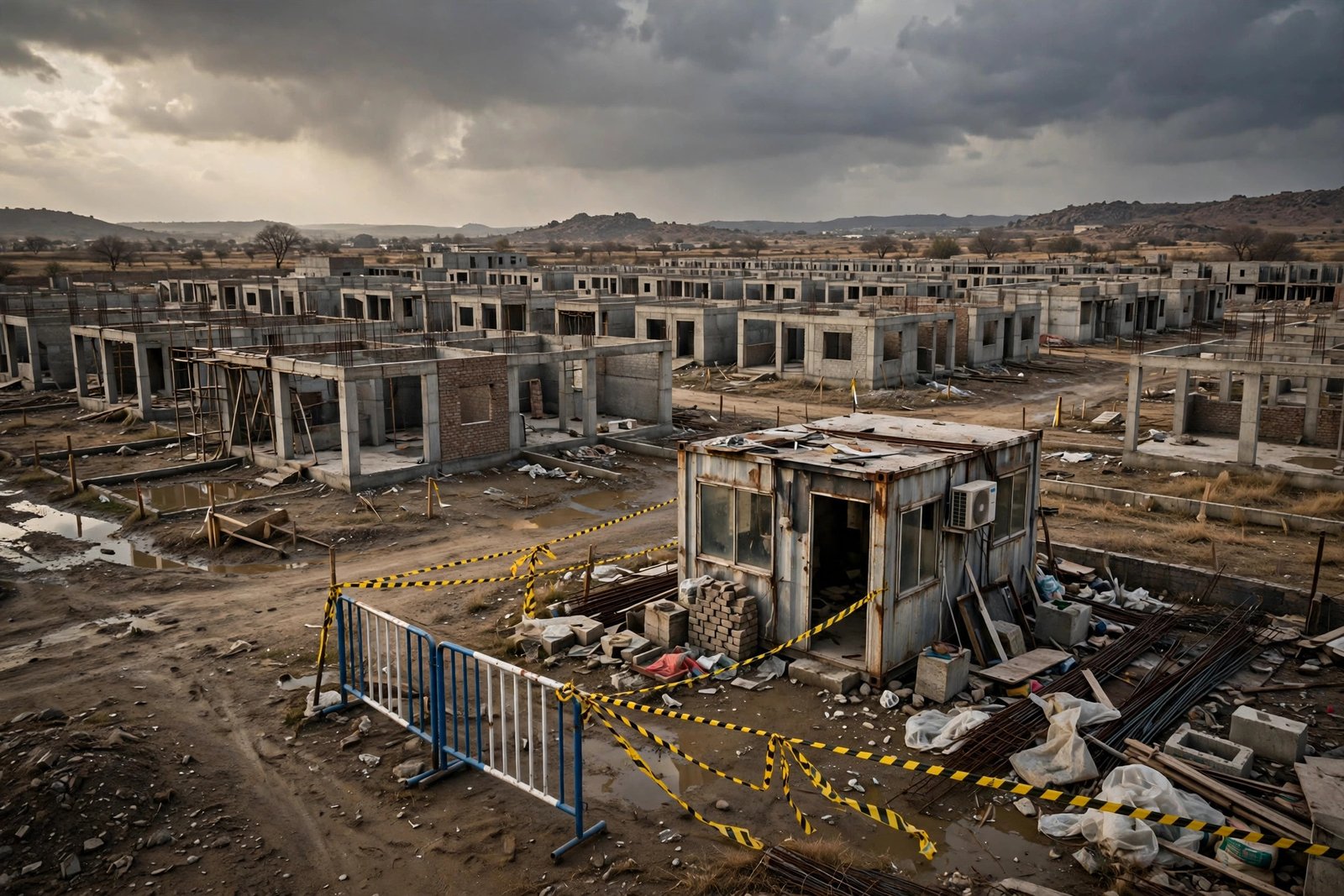
Housing Society Fraud in Pakistan: Complaint, FIR & Refund Remedies
Every year, thousands of families in Pakistan hand over their life savings to housing societies that turn out to be fake, unapproved, or simply unwilling to hand over the plot they sold. The story is depressingly familiar: a glossy brochure, a "booking" office in a busy market, easy monthly installments — and then, years later, no plot, no development, and a phone number that no longer answers. If this has happened to you, or to someone in your family, you need to know two things right away. First, you are not powerless. Second, the clock is ticking, because every legal remedy — from the criminal FIR to the civil suit for your money back — gets harder the longer you wait.
This guide walks you through the whole picture in plain language: what actually counts as housing society fraud under Pakistani law, how to check whether a society is genuine before you pay a single rupee, exactly where to complain (the development authority, the police, the consumer court, or the civil court), how an FIR under the Pakistan Penal Code works against fraudulent developers, how to claim a refund with interest, and the documents you must gather today. It also flags the mistakes I see buyers make again and again in my own practice.
Quick answer: If a housing society cheated you, verify its approval with the development authority (LDA, CDA, KDA, RDA), then send a 30-day legal notice demanding refund or possession. If ignored, register an FIR under PPC 406/420 and approach the consumer court or file a civil suit to recover your money.
What Actually Counts as Housing Society Fraud?
Not every delayed plot is a criminal case. A society that is six months late on possession because of genuine development work is a breach of contract problem. But certain patterns cross the line into fraud — and knowing the difference decides whether you can go to the police or must go to the civil courts.
Classic fraud patterns in Pakistan:
- The phantom society. The developer has no approved layout plan, no NOC from the development authority, and sometimes does not even own the land it is "selling." Files are sold on the basis of a website and a rented office. When buyers ask for plots, there is nothing behind the promises.
- Overselling. The society owns 500 kanal of land but sells files for 2,000 plots. Mathematics guarantees that most buyers will never get possession. This is common in societies on the outskirts of Lahore, Karachi, and Rawalpindi.
- The disappearing developer. Payments are collected for years — installments, development charges, "transfer fees" — and then the office closes overnight. Sometimes the same group resurfaces under a new society name.
- File-only scams. Buyers are sold mere "files" or receipts with no allotment letter, no plot number, and no demarcated land. A file is not a plot. If your society has never given you a plot number and a site plan showing your plot's location, you should be worried right now.
- Mortgaged or disputed land sold as clear. The society sells you a plot on land that is mortgaged to a bank, under stay order, or disputed in court. You may pay in full and still never get title.
- Excessive "development charges." After the full price is paid, buyers are hit with development charges double or triple the original agreement — often a pressure tactic to force resale back to the developer at a discount.
If any of these sound familiar, do not assume it is "just a delay." Get legal advice and start the verification process described below.
Who Regulates Housing Societies in Pakistan?
There is no single national regulator for housing societies. Regulation is provincial and city-based, and this confuses buyers constantly. Here is the map that actually matters:
- Punjab: The Lahore Development Authority (LDA) regulates societies in Lahore; the Rawalpindi Development Authority (RDA) covers Rawalpindi; the Multan Development Authority (MDA) covers Multan; other cities fall under their respective development authorities. Co-operative housing societies are registered under the Co-operative Societies framework with the Registrar of Co-operative Societies, Punjab.
- Sindh: The Karachi Development Authority (KDA) and the Malir Development Authority (MDA) are the key bodies in Karachi. Co-operative societies register with the Co-operative Department, Government of Sindh.
- Khyber Pakhtunkhwa: Development authorities like the Peshawar Development Authority (PDA) regulate private housing schemes; co-operative societies register with the provincial Co-operative Department.
- Islamabad: The Capital Development Authority (CDA) regulates housing schemes in the capital territory. Schemes in Islamabad must have CDA approval of layout plans before selling plots to the public.
One caution from practice: some societies claim they are "registered" with the Securities and Exchange Commission of Pakistan (SECP) and wave a company registration certificate at buyers. An SECP company registration is not a housing scheme approval. A developer can be a perfectly valid company and still be running a completely unapproved scheme. The only approval that matters is the NOC and approved layout plan from the development authority of that city, plus clear land title in the society's name.
How Do I Check Whether a Housing Society Is Genuine?
Before paying anything — or right now, if you have already paid — run these checks. Every one of them is free or nearly free, and each takes minutes to days, not weeks.
Step 1: Ask the society for its NOC and approved layout plan
A genuine society will show you, without hesitation: (a) the NOC from the development authority, (b) the approved layout plan with the society's name and approval number, and (c) proof of land ownership or transfer in its favour. Refusal, delay, or "sir, file head office me hai" excuses are a red flag. Real approvals are documents the society is proud to display — they are its main selling point.
Step 2: Verify directly with the development authority
Do not trust photocopies. Visit the development authority's office (or its official website's approved-schemes list) and ask whether the society is approved, whether the layout plan on record matches what was shown to you, and whether any complaints or cancellation proceedings are pending against it. In Lahore, the LDA maintains lists of approved and illegal schemes; Karachi's authorities publish similar lists. This single visit has saved my clients crores of rupees.
Step 3: Check the land record
Ask for the khasra numbers / survey numbers the society claims to own, and have them checked in the land revenue record (the patwari or the online land record system of the province, where available). The land should be in the society's name or in the name of its declared sponsors, free of mortgage, stay order, or government acquisition proceedings. Land under acquisition for a government project cannot be sold to you as a residential plot, no matter what the brochure says.
Step 4: Inspect the site physically
Walk the land. Is there boundary walling, roads, electricity poles — or is it an empty field with a signboard? For societies claiming "development in progress," compare what you see with the development schedule in your allotment letter. I have seen buyers pay full installments for five years on plots where not a single brick had been laid.
Step 5: Search for complaints and litigation
Ask around in the area. Search the society's name along with words like "fraud," "FIR," "complaint," and "NAB" online. Check whether the society or its owners face cases in the accountability courts or consumer courts. A society drowning in litigation against buyers is telling you everything you need to know.
Step 6: Never buy on verbal promises
Whatever the marketing office tells you — "possession in 6 months," "no development charges," "file will double in value" — is worthless unless it is written into the allotment letter or agreement. Get every promise in writing, signed and stamped. In my experience, the promises made across a desk in DHA Phase 8 marketing offices and small-town booking offices alike have an identical survival rate once money changes hands: zero, unless documented.
What Should I Do First If I Suspect I Have Been Cheated?
Do these four things this week, in this order. Each protects a different right.
- Stop further payments. Do not keep paying installments "to protect your file" while the developer is under suspicion. Every additional rupee is harder to recover. Yes, the society may threaten cancellation — but a cancelled allotment letter is actually evidence, and cancellation threats are often how fraudsters keep victims paying.
- Gather every document you have. Allotment letter, booking form, payment receipts (bank transfers, pay orders, cheques — cash receipts too), the society's brochure, WhatsApp chats with the marketing staff, and any written promises. Photograph or scan everything; keep originals in a safe place. If you paid cash without receipts — and many buyers do — write down dates, amounts, and the names of the people you paid, while your memory is fresh.
- Send a legal notice. Through a lawyer, send a registered legal notice (with acknowledgement due) to the society's registered office demanding either possession of the plot within 30 days or a full refund with profit/markup, and stating that criminal and civil proceedings will follow. The notice creates a paper trail, fixes your claim date, and is a prerequisite for several forums. Keep the postal receipts.
- File a complaint with the development authority. Write to the development authority (LDA, RDA, KDA, CDA — whichever applies) with copies of your documents, asking it to take action against the unapproved or defaulting scheme. Authorities can seal booking offices, cancel NOCs, and in some cases restrain further sales. This complaint also becomes supporting evidence if you later go to court.
How Do I Register an FIR Against a Housing Society?
When a developer takes your money with no intention of delivering the plot — or diverts it, or sells the same plot twice — that is not merely a civil dispute. It is potentially a criminal offence, and the police can act.
The relevant sections of the Pakistan Penal Code (PPC):
- Section 406 — criminal breach of trust. Applies when property (your money) was entrusted to someone and they dishonestly misappropriated or converted it. Buyers who paid installments to a society that never intended to allot plots routinely invoke this section.
- Section 420 — cheating and dishonestly inducing delivery of property. Applies when you were induced by deception to hand over money — the classic "we are an approved society, possession in one year" pitch that was false from day one.
Both are cognizable offences, which means the police can arrest without a magistrate's warrant, and both carry imprisonment (up to 3 years for 406, up to 7 years for 420) plus fine.
The FIR procedure:
- Go to the police station in whose jurisdiction the society's office or the scheme land falls (or where the money was handed over), with your CNIC, allotment letter, and payment receipts.
- Give a written application addressed to the SHO, stating the facts chronologically: what was promised, what you paid (with dates and amounts), and what happened. Name the developer, its directors/owners, and the marketing staff who dealt with you, with CNIC numbers if you have them.
- Insist the FIR be registered under Sections 406 and 420 PPC. Take the FIR number and a copy.
- If the police refuse to register the FIR — which happens, especially when the developer is influential — do not argue at the thana and go home. File an application under Section 22-A/22-B CrPC before the Justice of Peace (usually the Sessions Judge / Additional Sessions Judge) seeking directions to the SHO to register the FIR. This is a routine application and courts grant it where a cognizable offence is disclosed. Our detailed walkthrough of the whole process is in the guide on how to file an FIR in Pakistan.
One practical warning: an FIR is a weapon, not a refund machine. It puts pressure on the developer and can lead to arrest and bail proceedings where settlements often happen — but it does not by itself return your money. That is why the FIR should run alongside, not instead of, the civil remedies below.
Can the Development Authority or NAB Help Me Get My Money Back?
The development authority can act against the society — sealing offices, cancelling approvals, stopping fresh bookings — but it generally does not adjudicate individual refund claims or order developers to pay you. Treat its complaint as regulatory pressure and evidence, not as your refund route.
NAB (National Accountability Bureau) takes up housing society fraud only in large-scale cases — typically where the cheating is on a massive scale involving huge amounts, or where public office holders are involved. A reference before the Accountability Court is a slow, heavy process. For an individual buyer cheated out of a 5-marla file, NAB is not the practical forum; mention it in complaints for pressure, but build your case in the forums below. State the scale honestly: exaggerating your loss to attract NAB's attention backfires when the file is scrutinised.
FIA enters the picture where the fraud involves money laundering, forged documents used across borders, or electronic fraud — not routine plot disputes.
How Do I Get a Refund? The Civil Remedies, Step by Step
Criminal proceedings punish the developer. These proceedings get your money back. You can — and usually should — pursue both tracks at once.
Option 1: Consumer court (fastest for many buyers)
If you bought the plot as a consumer (for your own residence, not for resale business), the provincial consumer protection laws may cover deficient services by builders and developers. The procedure: send the mandatory 15-day legal notice, then file before the District Consumer Court. No heavy court fee, relatively quick disposal, and the court can order refund, compensation, and costs. Read the full procedure in our guide on filing a consumer court complaint. Limitation periods are short under consumer laws, so do not sit on this.
Option 2: Civil suit for recovery
File a suit for recovery of the amount paid, with profit/markup and damages, before the civil court having jurisdiction (where the defendant resides or where the cause of action arose). You will need:
- Court fee (ad valorem — a percentage of the claimed amount; on a Rs. 5,000,000 claim this is a significant sum, so factor it into your decision),
- Your allotment letter, receipts, and the legal notice as evidence,
- Patience: a contested recovery suit typically takes 2–4 years through trial and appeal, though interim relief and settlements are common.
Ask your lawyer about specific performance as an alternative prayer: instead of money back, the court orders the society to actually allot and hand over the plot. This suits buyers who still want the property (for example, where the area's prices have risen sharply and a refund would not buy an equivalent plot elsewhere).
Option 3: Suit under the Illegal Dispossession Act 2005
If the society allotted you a plot and someone — the society itself or a third party — is occupying it or blocking your possession, the Illegal Dispossession Act 2005 provides a speedy criminal-cum-civil remedy for restoration of possession. This applies where possession, not just a paper allotment, is the dispute.
What about interest and damages?
Claim them. Courts routinely award markup/profit on the amount paid from the date of payment, plus compensation for mental anguish in consumer forums, and litigation costs. Plead them specifically with calculations — vague "damages as the court deems fit" pleadings recover less.
Documents Checklist: What You Need Before Any Forum
Gather these now. Missing documents are the single biggest reason otherwise strong cases fail.
- [ ] CNIC copy of the buyer (and of the person who made payments, if different)
- [ ] Allotment letter / provisional allotment / booking form (original)
- [ ] All payment receipts — bank transfer slips, pay orders, cheque copies, cash receipts
- [ ] Bank statements showing transfers to the society's accounts
- [ ] The society's brochure, payment plan, and any written promises
- [ ] Legal notice sent to the society + postal receipts (registered AD)
- [ ] Copy of the society's NOC / approved layout plan (if the society ever showed you one)
- [ ] Complaint copy filed with the development authority + any response
- [ ] FIR copy (if registered) or the 22-A/22-B CrPC order
- [ ] WhatsApp chats, emails, SMS with the society's staff (screenshots with dates)
- [ ] Names, designations, and CNIC numbers of the developer's directors/owners (from SECP records or the allotment documents)
- [ ] Photographs of the site showing the actual state of development
If you paid cash without receipts, do not assume your case is dead. Bank withdrawals matching the payment dates, witnesses who were present, the society's own ledger entries (which surface during investigation), and the developer's failure to deny receiving you as a buyer can still build a case. But learn the lesson for next time: never again.
Common Mistakes Buyers Make (Please Avoid These)
Paying in cash without receipts. This is the number one case-killer I see. Always pay by crossed cheque, pay order, or bank transfer into the society's official account — never into a "manager's personal account," no matter how trustworthy he seems over chai.
Buying a "file" instead of a plot. A file is a promise. Until you hold an allotment letter with a specific plot number, block, and size, you own nothing tangible. Societies that sell files for years without balloting plots are running a confidence game.
Skipping the development authority verification. "My cousin bought there, it's fine" is not due diligence. One visit to the LDA/RDA/KDA office costs you an afternoon and can save your life's savings.
Trusting the SECP certificate. As noted above, company registration is not scheme approval. Fraudulent developers love flashing SECP documents because buyers do not know the difference.
Waiting years before acting. Limitation kills cases. Buyers who wait five years "hoping development starts" often find their civil claims time-barred and their evidence stale. If possession is two years overdue with no development, act now.
Signing blank or incomplete documents. Never sign blank transfer forms, blank receipts, or agreements with key fields left empty "to be filled later." What gets filled later is never in your favour.
Accepting "adjustment" in another unapproved project. When caught, some developers offer to "adjust" your payment into their "new upcoming project" — which is equally unapproved. Do not trade one trap for another.
Not naming individuals in the FIR. An FIR against "the society" alone is weak. Name the owners, directors, and the staff who took your money. Companies act through people; criminal liability attaches to people.
Three Buyers, Three Lessons
Kashif from Karachi paid Rs. 1,800,000 in installments over three years for a 120-square-yard plot in a scheme near the Superhighway. When he visited the site, he found an empty field — no roads, no boundary wall, nothing. Worse, the KDA had no record of the scheme's approval. Kashif stopped payments, sent a legal notice, registered an FIR under Sections 406/420 PPC naming the developer's two directors, and filed a consumer court complaint. The directors sought pre-arrest bail; during the bail proceedings, they offered a settlement. Kashif recovered his full principal plus a portion of markup — but only because he had bank transfer receipts for every payment and acted within months of discovering the fraud, not years.
Ahmed from Lahore bought a 5-marla file in a society on the city's outskirts for Rs. 2,500,000, paying mostly in cash to the "booking manager's" personal account. Five years passed with no ballot, no plot number, and eventually no office. When Ahmed finally consulted a lawyer, the LDA confirmed the society had never held an NOC. His civil suit survived — barely — on the strength of two witnesses and his bank withdrawal slips, but the cash payments he could not prove are likely gone forever. Ahmed's lesson, in his own words: "I saved the 1% bank charges and lost forty lakh rupees."
Rashid from Rawalpindi did it right. Before booking a 10-marla plot, he visited the RDA, confirmed the NOC and matched the approved layout plan, checked the khasra numbers in the land record, walked the site, and paid by pay order into the society's account. When the developer later demanded "development charges" double the agreement, Rashid's allotment letter — which capped charges in writing — plus his RDA complaint got the demand withdrawn within weeks. Due diligence is boring. It also works.
Frequently Asked Questions
Can I file an FIR if the housing society simply delays possession?
Yes, if the delay is coupled with dishonest intent — for example, the society never had approval, oversold plots, or diverted your installments. A pure delay in a genuine, approved project is usually a civil matter (consumer court or civil suit), not a criminal one. The FIR needs facts showing cheating or breach of trust, not just slowness. When in doubt, put the facts before a lawyer before approaching the thana.
Which development authority do I complain to?
The authority of the city where the scheme is located: LDA for Lahore, RDA for Rawalpindi, KDA or MDA for Karachi, CDA for Islamabad, PDA for Peshawar, and the respective authority for other cities. For co-operative societies, you can also complain to the provincial Registrar of Co-operative Societies. File in writing and keep the receiving stamp.
The society offers a refund but deducts 20% as "cancellation charges." Is that legal?
Only if your signed agreement actually provides for such a deduction — and even then, consumer courts often strike down one-sided forfeiture clauses as unfair. If the society is at fault (no approval, no development, years of delay), you can claim the full amount plus markup. Do not accept the deduction quietly; challenge it in your legal notice.
I bought the file from a previous buyer, not the society. Do I have rights?
Yes, if the transfer was recorded with the society and you hold a transferred allotment letter in your name. Your claim then runs against the society for possession or refund. If the transfer was informal — a mere affidavit between you and the seller with no society record — your primary claim is against the seller. Always get transfers officially recorded.
How long does a refund case take in court?
A consumer court complaint is typically decided within months, though backlogs vary by district. A civil recovery suit usually takes two to four years including appeals. An FIR-driven settlement — where the accused seeks bail and offers payment — can resolve in weeks or months, which is why the criminal and civil tracks are best run together.
Can I get possession instead of a refund?
Yes. Through a suit for specific performance, you can ask the court to order the society to allot and deliver the actual plot. This makes sense where the location has appreciated and a refund would not buy you an equivalent plot. Your lawyer will advise which prayer — possession or recovery — suits your facts.
What if the developer has fled abroad or the company is dissolved?
The case does not die. Criminal proceedings can continue with warrants and, where applicable, extradition-related processes; civil decrees can be executed against the developer's known properties and bank accounts in Pakistan. Also investigate whether the same individuals are running a new scheme under a different name — this is common, and fresh victims strengthen everyone's case.
Should I join a group protest or collective complaint with other buyers?
Collective action has real advantages: shared legal costs, stronger pressure on authorities, and consistent evidence. But keep your own documents and file your own claim — group complaints sometimes settle for the loudest members while quiet ones get nothing. Join the group, but protect your individual file.
The police say it is a "civil matter" and refuse the FIR. What now?
This is routine. If your facts disclose cheating or breach of trust, file an application under Section 22-A/22-B CrPC before the Justice of Peace (Sessions Judge) seeking a direction to register the FIR. Courts pass such orders daily. Also file your development authority complaint and consumer case in parallel — you do not need the FIR to pursue those.
What Should You Do Today?
If you have read this far, you probably have a file, an allotment letter, or a stack of receipts sitting in a drawer — and a growing unease about them. Convert that unease into action today: pull out the documents, check the society's approval status with the development authority this week, and get a legal notice sent. Fraud thrives on the victim's hope that "things will work out." Hope is not a legal strategy. Paperwork, deadlines, and the right forum are.
And if you are still in the market — shopping for a plot, comparing brochures, being offered "limited files" with "prices going up next week"? Slow down. Verify first, pay later, and always by bank transfer. The plot will still be there tomorrow. Your money, once handed to a fraudster, will not.