
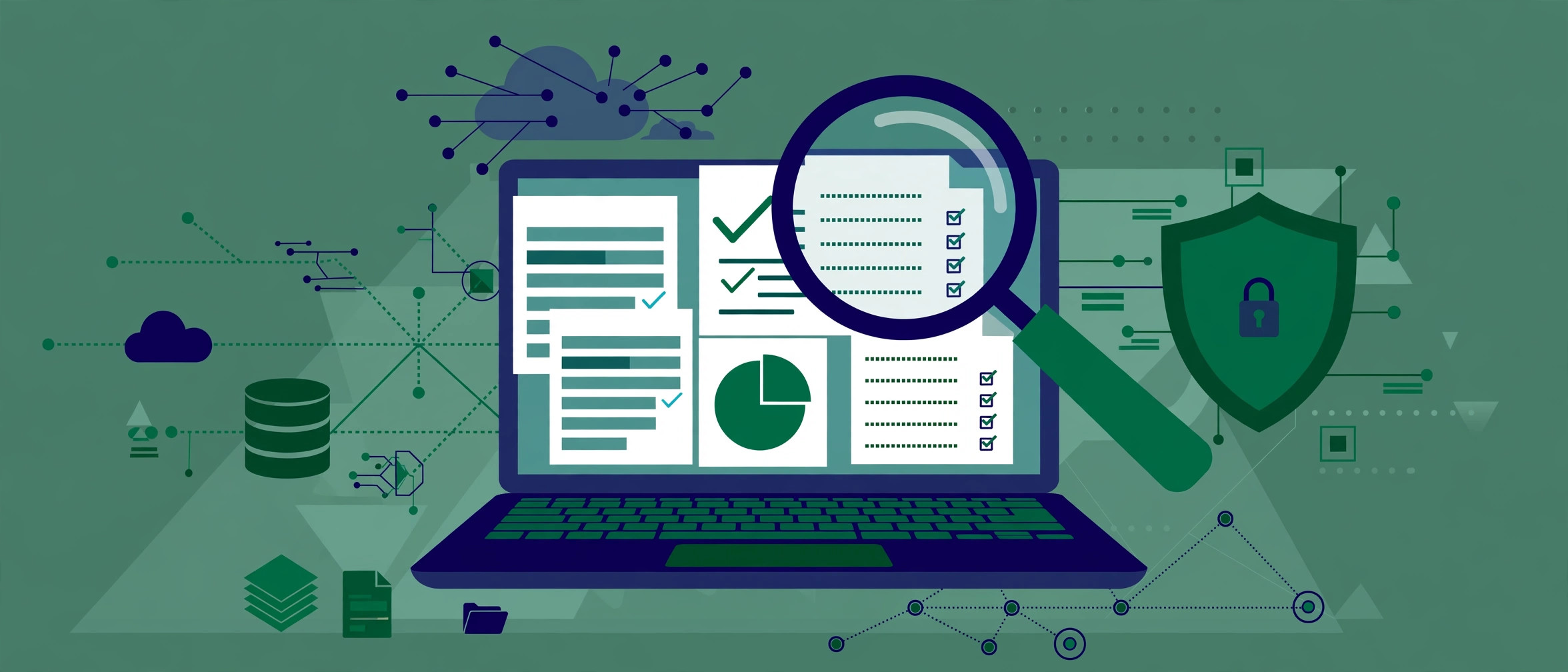
If you are a taxpayer in Pakistan — a salaried person, a business owner, a freelancer — there is a good chance that one day you will receive a notice from the Federal Board of Revenue (FBR) asking questions about your tax return. Until now, that usually meant dealing with a specific tax officer at your local tax office: visiting in person, submitting files by hand, and sometimes sitting across the table from the very officer who would decide your case.
That world changed on 15 October 2026. On that date, two short notifications — S.R.O. 1828(I)/2026 and S.R.O. 1825(I)/2026 — brought FBR's faceless audit and assessment rules into force for every person and every case. The rules themselves had been notified a couple of weeks earlier, on 29 September 2026 (S.R.O. 1665(I)/2026 for income tax and S.R.O. 1663(I)/2026 for sales tax), but they were waiting for a start date. That date is now fixed — and it has already passed.
This article explains what "faceless" means, what exactly is covered, how a taxpayer will experience the new system step by step, what happens if you ignore a notice, and what you should do right now to stay safe.
What Does "Faceless" Actually Mean?
"Faceless" does not mean that nobody looks at your case. It means that you never meet — and never know the identity of — the officer who looks at it. Under the new system:
- Your audit or assessment is handled through a central office called the National Faceless Centre (NFC), not your local tax office.
- A computerised allocation algorithm assigns your case to officers you will never meet.
- The officer who audits your case, the officer who assesses (decides the tax demand on) your case, and the officer who does the quality check on that decision are three different people — and the rules say no officer may perform more than one of these jobs for the same case and tax year.
- You communicate with the system, not with a person. Notices come through FBR's computerised system; your replies go through your IRIS account.
The idea behind this is straightforward: if the taxpayer and the tax officer never meet, there is less room for personal bias, pressure, harassment, or corruption. The decision should be based on the record alone. Similar faceless systems have been introduced in other countries, including India, where faceless assessment has been running for several years.
But "faceless" also means you lose something: the human conversation. You cannot walk into an office, explain your situation face to face, and clear up a misunderstanding in five minutes. Everything must be done in writing, through the system, within deadlines. That makes it more important than ever to understand the process.
The Legal Foundation: Which Notifications and Rules Apply
The faceless regime rests on a small stack of notifications. Here is what each one does, in plain language:
- S.R.O. 1665(I)/2026 (29 September 2026): Notified the actual faceless rules for income tax — Chapter XX of the Income Tax Rules, 2002 (rules 233 to 245). At the time, the rules said they would start on a date FBR would announce later.
- S.R.O. 1663(I)/2026 (29 September 2026): Notified the matching faceless rules for sales tax — Chapter VIAC of the Sales Tax Rules, 2006 (rule 441 onwards). Same deferred start.
- S.R.O. 1828(I)/2026 (15 October 2026): The start notification for income tax. It brings Chapter XX into force "for every person or case" with effect from 15 October 2026. It is a one-page notification signed by the IR-Policy Wing, and it names no special class of taxpayers — it applies across the board.
- S.R.O. 1825(I)/2026 (15 October 2026): The start notification for sales tax. It brings Chapter VIAC into force for all persons and cases from the same date. It cites section 50 of the Sales Tax Act, 1990 and section 40 of the Federal Excise Act, 2005, so it covers federal excise proceedings too.
The same 15 October batch also included two unrelated notifications — S.R.O. 1827(I)/2026, which rewrites rule 231C on alternative dispute resolution, and S.R.O. 1829(I)/2026 on a minimum value for re-meltable scrap supplied to steel melters. Those are separate matters and not part of the faceless system.
Two honest caveats, based on what has been reported: first, the start notifications cover "every person or case," but no separate order has been found naming exactly which cases are assigned to the National Faceless Centre or how a case already open with a local office is treated — so there is still some uncertainty about transition. Second, some business reporting has described the system as using artificial intelligence, but FBR's notifications do not mention artificial intelligence; the rules speak only of an allocation algorithm. Treat AI claims cautiously.
What Is Covered: Which Proceedings Go Through the Centre
Under rule 236 of Chapter XX, the National Faceless Centre handles the following income tax proceedings:
- Audits under section 177 or section 214C of the Income Tax Ordinance, 2001. Section 177 is the general audit power; section 214C covers selection of cases for audit through computer ballot.
- Proceedings and orders under section 111 — this is the provision on unexplained income or assets. If FBR believes you own something or spent money that your declared income cannot explain, the case runs through the centre.
- Assessments and amended assessments under sections 120, 121 and 122 — including best judgment assessments (where FBR estimates your income because you did not file properly) and provisional assessments.
- Notices under sections 176 or 177, and any penalty or default surcharge arising from these proceedings.
On the sales tax side, Chapter VIAC covers:
- Audit under section 25 or section 72B of the Sales Tax Act, 1990.
- Proceedings under section 11E of the Sales Tax Act.
- The notices, penalties and default surcharge that come with those proceedings.
In short: if FBR wants to audit you, question unexplained income, amend your assessment, or impose a penalty or surcharge connected with these proceedings, the case now runs through the faceless centre — not through the officer down the road.
How You Will Experience It: Step by Step
Here is what the process looks like from the taxpayer's side:
Step 1 — A notice arrives. The notice will appear in your IRIS inbox (and may also come by email). Under rule 238, every notice, order or communication from the centre must be generated on FBR's computerised system and must carry a Digital Identification Number (DIN). No DIN, no validity — a paper notice without a DIN, or someone asking you to meet an officer in person about a faceless case, does not fit these rules and should be treated with suspicion.
Step 2 — Check the notice carefully. Before you panic, read three things: the DIN (confirm it is there), the date, and the section of law cited (for example, section 177 for audit or section 111 for unexplained income). The deadline for your reply runs from service of the notice, so note the date immediately.
Step 3 — Prepare your reply. Gather the records the notice asks for — bank statements, purchase invoices, salary slips, whatever is relevant. Prepare them as clear, searchable files (PDFs generated from documents, not blurry photographs of pages). Write your explanation in plain, organised language, point by point.
Step 4 — Reply only through IRIS. Under rule 239, every reply, submission, document or evidence from you or your representative must be sent through your designated IRIS account. Do not send replies by hand, by post, or by visiting an office — for a case assigned to the centre, those routes do not count. After submitting, download and save the acknowledgement.
Step 5 — Electronic hearings. If a hearing is needed, it is an electronic hearing under section 227E of the Income Tax Ordinance. A statement on oath under section 176 can also be recorded through an e-hearing. You (or your authorised representative) participate remotely; there is no in-person appearance before the deciding officer.
Step 6 — Separate audit, assessment and quality review. Behind the scenes, the allocation algorithm assigns your audit to one officer or unit, the assessment to another, and the quality-control review of the audit report and assessment order to a third (rule 242). You are not told who any of them are. The idea is that three independent looks at the same case reduce the chance of an arbitrary or one-sided decision.
Step 7 — Physical verification (only in special cases). The system is faceless, but it is not entirely virtual. Under rule 241, the audit unit can ask the Chief Commissioner to authorise a physical verification of your business, assets or stock through the Field Operations Wing. This is the exception, not the rule — and it requires authorisation.
Step 8 — The order. The assessment order or audit conclusion is issued through the system with a DIN. If tax, penalty or default surcharge is imposed, the order will say so, and your appeal rights against it remain.
Deadlines: Why Time Matters More Than Ever
In the old system, a taxpayer who missed a deadline could sometimes visit the officer, explain the delay, and get extra time informally. In a faceless system, there is no officer to visit. Deadlines in the notice are the deadlines — the system records whether you replied in time.
- Note the reply deadline the day the notice arrives. The clock runs from service, and "I did not check my IRIS inbox" is not a defence.
- Ask for extension in writing, through IRIS, before the deadline expires — if the rules and the notice allow it. Do not assume silence means extra time.
- Keep proof of everything. Download every acknowledgement, every submitted document, every notice. If there is ever a dispute about whether you replied, your IRIS submission history is your evidence.
What Happens If You Ignore a Notice
Ignoring an FBR notice was never wise; under the faceless system it is worse, because the machine does not get tired, forget, or feel sympathy. Here is what can follow:
- Best judgment assessment: If you do not respond, FBR can assess your income on a "best judgment" basis under the Ordinance — which in practice often means a higher figure than your actual income, because the officer (or the system) estimates from whatever information is available.
- Penalties: Penalties can be imposed for non-compliance — for example, for failure to file or failure to produce records when required. The faceless rules specifically bring penalties connected with these proceedings into the centre's scope.
- Default surcharge: If tax is found due and not paid, default surcharge (essentially interest-like compensation for late payment) accrues under section 205 of the Income Tax Ordinance.
- Section 111 consequences: If the issue is unexplained income or assets and you offer no explanation, the amount can be added to your income and taxed — with no one to hear your side because you never presented it.
The bottom line: a faceless notice demands a written, on-time, well-documented reply. Silence is the most expensive option.
Who Is Affected — and Who Should Pay Closest Attention
Technically, the start notifications apply to "every person or case." In practice, the taxpayers who should be most alert are:
- Businesses selected for audit under section 177 or through the section 214C ballot — especially those with large turnovers or complex records.
- Anyone who receives a section 111 notice about unexplained income, assets, or expenditure.
- Sales tax registered persons facing audit under section 25 or 72B, or proceedings under section 11E.
- Taxpayers with open audits or assessments — because it is not yet clear from any published transition order how cases already open with local offices move (or do not move) to the centre. If you have an open case, assume the next step could come through the centre and keep your IRIS contact details current.
Practical Tips: Protecting Yourself Under the New System
- Update IRIS today. Log in to IRIS and confirm that the email address and mobile number on your profile are current. Notices may arrive by email as well as in your IRIS inbox — if FBR has your old email, you could miss the deadline without knowing. Use Form 181 to update your contact details if needed.
- Check IRIS regularly. Make it a habit — weekly at least. A notice sitting unread in your inbox does not pause its deadline.
- Verify every notice. Check the DIN, the date, and the section cited before you respond. A genuine faceless notice is system-generated with a DIN. If something looks off — no DIN, a demand to meet in person, a request for payment to a personal account — verify before acting. FBR-related fraud is real.
- Reply in writing, on time, through IRIS only. Keep your replies organised and factual. Attach clear documents. Download the acknowledgement for every submission.
- Keep your records ready year-round. The best defence against any audit is a clean record: filed returns, reconciled bank statements, invoices, and books that match. Do not wait for a notice to start organising.
- Get professional help for serious cases. A section 111 (unexplained income) notice or a major audit is not a DIY project. A tax consultant or lawyer who understands the faceless procedure can draft replies that address the legal issues properly. Remember: in a faceless system, your written reply is your entire case — there is no hearing-room charm to fall back on.
- Know that physical verification needs authorisation. If someone shows up claiming to verify your business or stock for a faceless case, ask for the authorisation. Rule 241 requires the process to go through the Chief Commissioner and the Field Operations Wing — it is not a casual visit.
Frequently Asked Questions
Q: Are FBR's faceless audit rules actually in force now? A: Yes. S.R.O. 1828(I)/2026 brings Chapter XX of the Income Tax Rules, 2002 into force for every person or case from 15 October 2026, and S.R.O. 1825(I)/2026 does the same for Chapter VIAC of the Sales Tax Rules, 2006 from the same date. The rules themselves were notified on 29 September 2026; the 15 October notifications fixed the start date.
Q: Does this apply to sales tax as well as income tax? A: Yes. The income tax side runs under Chapter XX of the Income Tax Rules (audits under sections 177/214C, section 111 proceedings, assessments under sections 120–122, penalties and default surcharge). The sales tax side runs under Chapter VIAC of the Sales Tax Rules (audits under sections 25/72B, proceedings under section 11E, with notices, penalties and default surcharge). The sales tax notification also cites the Federal Excise Act, so federal excise proceedings are covered too.
Q: Can I still visit my tax office to discuss or reply to my case? A: Not for a case assigned to the National Faceless Centre. Rule 239 requires all replies and documents to go through your IRIS account, and hearings are electronic under section 227E. Visiting the local office does not count as a reply for a faceless case.
Q: Will I know which officer is handling my case? A: No. The allocation algorithm assigns the audit, the assessment, and the quality-control review of each case to different officers or units, and their identities are kept confidential from the taxpayer. No officer may handle more than one of these three functions for the same case and tax year.
Q: What is a DIN and why does it matter? A: DIN stands for Digital Identification Number. Under rule 238, every notice, order or communication from the National Faceless Centre must be generated on FBR's computerised system and must carry a DIN. It is your first authenticity check: a notice without a DIN does not fit the faceless rules.
Q: What if my audit started before 15 October 2026? A: The notifications do not say. Rule 233(1) ties the chapter to persons, classes or cases specified by the Board, and no transition order for already-open cases had been found on the FBR website as of the reported checks. If you have an open audit or assessment, assume the next development could come through the centre, keep your IRIS details updated, and consult your tax adviser about your specific case.
The Bottom Line
This article provides general legal information for readers in Pakistan and is not legal advice. For advice about your own situation, consult a qualified advocate.