
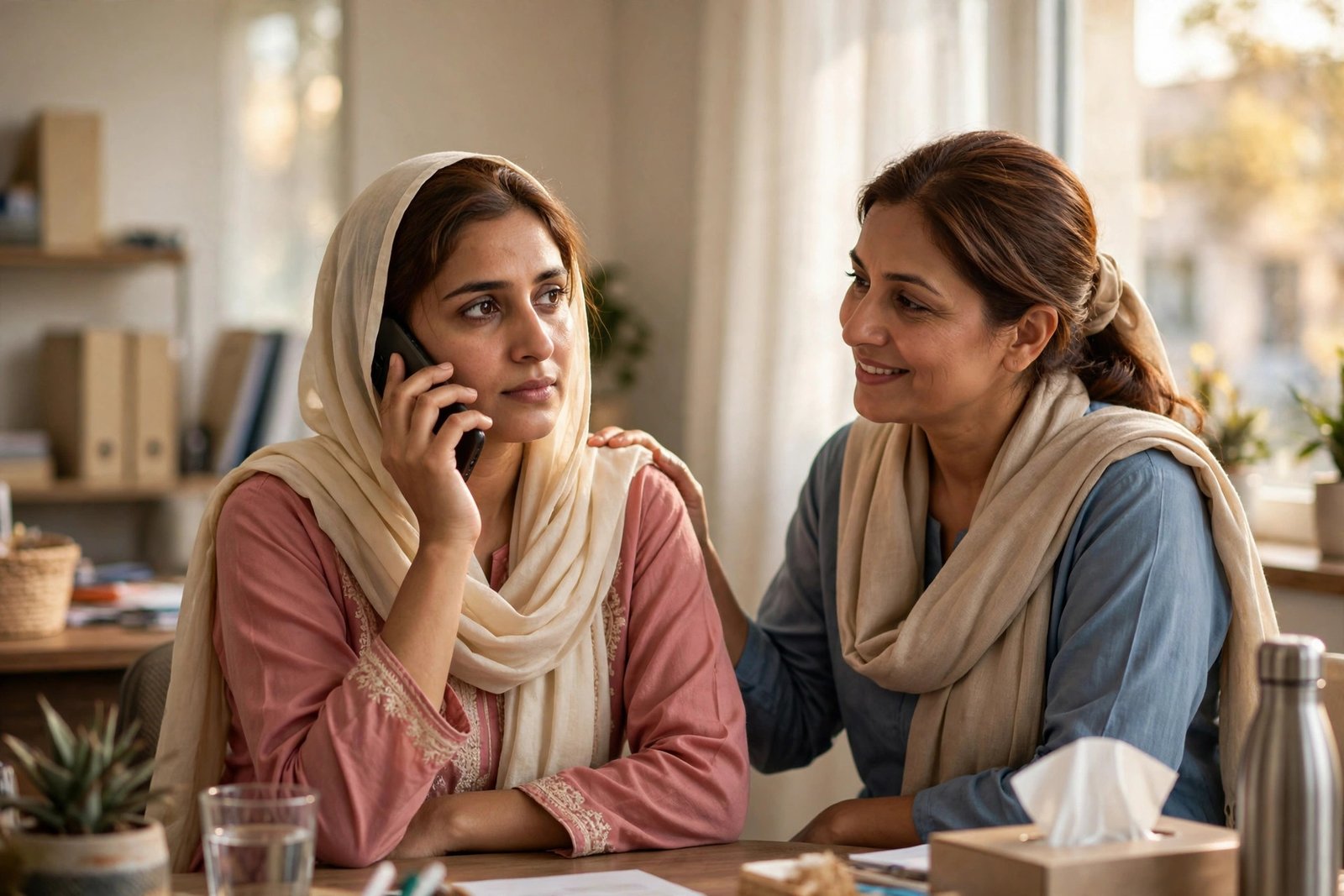
Quick answer: Pakistan's Domestic Violence (Prevention and Protection) Act, 2026 — a federal law applying to Islamabad, passed by Parliament in January 2026 — now treats abuse inside the home as a standalone criminal offence. It covers far more than physical beatings: emotional harm, stalking, financial control and threats of divorce used as coercion are crimes, punishable by 6 months to 3 years in prison plus fines up to Rs 100,000 paid to the victim as compensation.
What exactly is new in the 2026 Act?
For years, Pakistan dealt with domestic abuse through provincial laws. Punjab has its Protection of Women Against Violence Act (2016), Sindh moved in 2013, Balochistan in 2014, and KP in 2021. Those laws exist — and I cover them in detail in my earlier article on Domestic Violence Protection Laws in Pakistan. But Islamabad, the federal capital itself, had no federal domestic violence law at all.
That changed when Parliament, in a joint session in January 2026, passed the Domestic Violence (Prevention and Protection) Act, 2026, which President Zardari signed on 26 January 2026. And yes — one widely shared legal analysis (Sep 29, 2026) says "passed in March 2026"; multiple press reports put the joint-session passage and presidential signing in January, so treat January 2026 as the reliable date.
One honest caveat first, because I never want a reader misled: this is a federal Act, but its direct territorial reach is the Islamabad Capital Territory. The provinces still run on their provincial acts. So why does it matter to someone in Sialkot or Karachi? Because this is the first Pakistani law to define humiliation, stalking and financial control as violence in their own right — not background noise to a bruise — and it is already being cited as the model the provinces will follow. Also, Parliament passing it in a joint session means its principles will echo in every courtroom in the country.
So what does "standalone criminal offence" actually mean?
This is the biggest shift. Under the older approach, a lot of what happened inside a home was treated as a "private family matter." Police would hesitate to register complaints. Families would push for sulha (reconciliation) instead of justice. The new Act says: no. Domestic violence is a crime against the law, not a family embarrassment to be handled over chai at the dera.
Practically, this means three things.
First, once a protection, residence, or custody order is issued by the court, breaking it is itself a criminal offence — not contempt, not a family dispute, a crime. A husband who barges into the house after a court told him to stay away is not having a marital disagreement. He is committing an offence.
Second, the offence of domestic violence stands on its own legs. If the same act is already punishable under the Pakistan Penal Code — say, hurt (sections 332–338-H), criminal intimidation (503/506), or cruelty by husband or relatives (498-D) — the PPC applies and the new Act supplements it. If it is not covered by the PPC, the Act punishes it directly. Nothing falls through the cracks.
Third, the state is no longer a spectator. The Act creates Protection Officers and Protection Committees. You do not walk into this fight alone and unarmed.
Who does this law actually cover?
Here is where most people get it wrong. Ask ten people on the street who a "domestic violence victim" is, and nine will say "a beaten wife." That picture is too small.
The Act's definition of a "domestic relationship" is deliberately wide. It covers spouses — but also children, elderly dependents, persons with disabilities, transgender persons, and other household members. The LinkedIn analysis I reviewed notes coverage of men, domestic workers and elderly dependents. Let me address those directly, because these are the people who never think the law is for them.
Men. Yes, men. Mere tajurbe me aksar I see cases where a husband is emotionally destroyed — threatened, humiliated in front of children, cut off from his own earnings — and everyone around him laughs it off because "mard ko kaun marta hai." The Act does not laugh. A man in a domestic relationship has the same right to a protection order as a woman. Filing as a man takes courage in our society. The law, at least, does not discriminate.
Elderly parents. An old mother whose son takes her pension book, an old father kept in one room and denied his own money — these are textbook cases of economic abuse under the new law. "Aggrieved person" includes elderly dependents. I will give you a full hypothetical below, because this scenario is far more common than anyone admits.
Domestic workers. A maid, driver, or cook who lives in the household — or even works in it daily — is in a "domestic relationship" with the employer under the Act's broad reading. Stalking, verbal abuse, humiliation and harassment of domestic workers are no longer just "malik ka gussa." They can be reported.
Transgender persons. The Act explicitly covers transgender household members — a meaningful step, given how rarely khwaja sira complainants are taken seriously at thanas.
Children. Abuse, neglect of care and maintenance, and false allegations against children in the household are all covered.
What now counts as "domestic violence"?
This is the section to read twice. The Act defines domestic violence to include physical, sexual, emotional, psychological, verbal and economic abuse. That is a long list. Let me translate it into things that actually happen in Pakistani homes.
Emotional and psychological harm. Repeated taunts, insults, humiliation in front of family or guests, threats of physical harm — these are offences. The famous flashpoint: threatening divorce or a second marriage on baseless accusations — for example, threatening talaq while claiming the wife is "pagal" or infertile without any basis. Parliament debated this fiercely, and it is in the law. It does not ban divorce. It criminalises using the threat of divorce as a weapon of control.
Stalking. The law criminalises stalking of wives, children, disabled persons and elderly family members. Following a spouse, intrusive surveillance, the "intrusive staring" Parliament specifically mentioned — the law names these.
Financial control (economic abuse). This one will shock many households, because half of Pakistan does not realise this is abuse. Examples:
- A husband takes the wife's entire salary every month and gives her nothing, or "pocket money" of Rs 2,000 while he spends freely.
- In-laws keep the wife's CNIC, passport, or bank documents so she cannot open an account or travel.
- A son "manages" his widowed mother's pension and uses it for his own family, leaving her to beg for basic needs.
- A wife is denied money for her own medical treatment while the family spends on everything else.
Under the Act, economic abuse is a punishable offence, and the court can order monetary relief to the victim.
Sexual abuse. Defined as any conduct of a sexual nature that humiliates, degrades or violates dignity — evaluated in the overall facts and circumstances of the domestic relationship.
False allegations and neglect. Levelling false accusations against a family member, neglecting the care and maintenance of dependents — both are in the law. And Wife Maintenance Rights in Pakistan explains the maintenance side of these obligations in detail.
Wait — does this law criminalise divorce or second marriage?
No. Let me say it plainly, because this caused genuine controversy and bad information is still circulating: divorce and polygamy are not criminalised by this Act. A man retains his legal right to talaq, and to a second marriage where the law permits it.
What IS criminalised is using either as a threat or coercive tool — "main tumhein talaq de dunga agar tumne apne walden se paisay na mangay," or "main doosri shaadi kar lunga" said repeatedly to keep a spouse terrified and obedient. The Express Tribune's reporting on the law raised a fair caution here: courts will need to distinguish a genuine marital dispute from an abusive threat. That line-drawing will happen case by case.
So the distinction is simple in principle, tricky in practice: the right is untouched; weaponising the right to control a spouse is a crime. If you are in a genuine dispute about a second marriage or divorce, document your position. If someone is using the threat to crush you, that is exactly what this law was written for.
What punishment can an offender face?
The numbers are worth memorising:
- Simple imprisonment: minimum 6 months, maximum 3 years — the exact term depends on the gravity of the act.
- Fine: Rs 20,000 to Rs 100,000 — and here is the part most people miss: the fine is paid as compensation to the aggrieved person, not just swallowed by the state. Up to a lakh can go to the victim.
- Default on the fine: up to 3 additional months of simple imprisonment.
- Aiding or abetting: the same punishment as the offender. The mother-in-law who orchestrates, the brother who holds the door, the friend who threatens — equal liability. No hiding behind "maine kuch nahi kiya, bas khara tha."
Mere tajurbe me aksar I tell clients: the abetment clause is the one that actually changes behaviour, because abuse in Pakistani households is rarely a one-person operation.
How do you actually use this law? Step by step.
Reading about a law and using it are two different things. Here is the practical path.
Step 1: Get safe, then document.
If you are in immediate danger, go to the nearest police station or call the police helpline 15. For complaints of human-rights violations and domestic abuse, the Ministry of Human Rights runs a national helpline at 1099 (landline) and 0333-9085709 (WhatsApp) — operational 10 am to 10 pm daily. In Punjab, the women's helpline 1043 operates round the clock. (One widely shared analysis of the new Act mentions "1121"; note that 1121 is the Punjab Child Protection helpline, so for domestic-abuse complaints use 1099 or your province's line.)
From day one, preserve evidence: screenshot abusive WhatsApp messages and threats (with dates), keep medical reports from any hospital visit, save voice notes, note witnesses — the neighbour who heard it, the lady health worker who saw bruises. Aksar log ye ghalti karte hain: they delete everything in anger or shame, and then it is your word against his.
Step 2: Approach a Protection Officer.
Under the Act, an aggrieved person — or anyone authorised by them — files a petition through a Protection Officer in the court that has jurisdiction: where the aggrieved person resides or works, or where both last resided together. You do not need to face the courtroom alone at the first step.
In practice, in Islamabad, this means the District Courts. Women Protection Cells and the Gender Protection Unit at the police facilitation centre in F-6, Islamabad, also assist victims of domestic and gender-based violence. For legal help you cannot afford, Free Legal Aid in Pakistan: Where to Find a Free Lawyer Near You lists where free representation is available, and the Act provides for victim liaison offices and free legal aid.
Step 3: Know the timeline the court must follow.
This is one of the Act's strongest features — it puts the court on a clock:
- First hearing within 7 days of the petition reaching the court.
- The court may pass an interim protection order right away, before the full hearing.
- The respondent gets notice and must show cause within 7 days.
- The petition must be decided within 90 days.
- Any adjournment needs written reasons recorded by the court.
To kya aap bina wakeel ke ye kar sakte hain? Technically yes — the procedure is designed to be accessible. Practically? A lawyer who knows this Act will get your interim order faster and phrase the relief correctly. Use the free legal aid options rather than going in cold.
Step 4: Know what orders you can ask for.
- Protection order — the abuser must stop the violence, and can be ordered to keep distance from you.
- Residence order — your right to live in the shared household, even if the house is not in your name. Read that again. "The aggrieved person shall have the right to reside in the shared household, whether or not the aggrieved person has any right, title or beneficial interest in the same." You cannot be thrown out of your home. The court can also arrange alternative accommodation or a shelter home, and can order the abuser to maintain distance — some reports even mention GPS tracking orders in extreme cases.
- Custody order — for children, alongside temporary custody arrangements.
- Monetary relief — compensation for injuries, mental trauma, property damage, medical expenses and maintenance.
What happens after you file? A realistic timeline.
Week 1: petition filed through the Protection Officer; first hearing fixed (legally within 7 days); interim protection order possible. In practice, expect 1–3 weeks in a busy district court — Islamabad's District Courts handle heavy caseloads, so the interim order is your real first shield.
Weeks 2–8: respondent is served, replies filed, evidence exchanged. The 90-day decision clock is real, but adjournments with written reasons are permitted — some cases genuinely stretch to 4–6 months.
And then comes the part nobody warns you about: family pressure to withdraw. The calls will come — "ghar ki izzat ka sawal hai," "bachon ke liye wapas le lo." I will not tell you what to decide. I will tell you this: never withdraw a complaint without your lawyer's advice and without a written, court-recorded understanding. Withdrawn complaints cannot be "un-withdrawn," and an abuser who sees you fold once learns exactly how to make you fold forever.
Common mistakes that ruin good cases
- Withdrawing under family pressure without legal cover. Discussed above. The single most common way strong cases die.
- No evidence preservation. No screenshots, no medical reports, no witnesses noted. Then it is allegation versus denial.
- Reporting to the wrong forum first and getting bounced around. Start with the Protection Officer route or a lawyer; do not just tell a random constable and hope.
- Assuming it is "not serious enough." Emotional cruelty and financial control were invisible under the old framework. They are crimes now. If it controls you, it qualifies.
- Assuming the law is women-only. Men, elderly parents, domestic workers — the scope is wider than you think, and silence is exactly what abusers count on.
- Not knowing the 7-day and 90-day clocks. If the court is sleeping on your petition, your lawyer can push — the timelines are statutory, not suggestions.
Documents checklist — keep these ready
- Your CNIC (and B-Form for children, if custody is involved)
- Proof of residence — utility bill, rent agreement, or anything showing the shared household
- Marriage certificate (nikahnama) for spousal cases — NADRA-registered copy is best
- Evidence of abuse: screenshots of threats with dates, call recordings (check legality with your lawyer), photographs of injuries
- Medico-legal certificate from a government hospital if there was physical harm
- Bank statements or salary slips if economic abuse is alleged (showing money diverted or denied)
- Witness details: names and contact numbers of neighbours, relatives, or workers who saw or heard the abuse
- Any prior complaints, FIRs, or panchayat/elders' decisions on the same matter
Frequently asked questions
Does the 2026 Act apply outside Islamabad? Not directly. It is a federal Act with territorial application to the Islamabad Capital Territory. Punjab, Sindh, Balochistan and KP have their own provincial protection laws. But this is the most modern and detailed framework Pakistan has, and courts and lawmakers in the provinces are already looking at it as the template. If you live in Islamabad, it applies to you in full.
Can a man file a complaint under this Act? Yes. The Act protects any person in a domestic relationship, regardless of gender. Husbands facing emotional cruelty, threats, or financial control have the same right to approach a Protection Officer. Mere tajurbe me, men rarely file — social pressure, not the law, stops them.
Is shouting at a spouse now a crime? Not every harsh word. The Act targets conduct that causes harm or fear — repeated verbal abuse, insults, humiliation, threats. A single argument is a marital dispute; a pattern of degradation designed to break someone is domestic violence. Context and overall circumstances decide, as the Act itself says.
Can my in-laws be punished too, or only my husband? Anyone in the domestic relationship — mother-in-law, father-in-law, brother-in-law — and anyone who aids or abets the abuse faces the same punishment as the main offender. The law follows the conduct, not the relationship label.
Will the fine money really come to me? Yes. The Act specifies the fine (Rs 20,000–100,000) is paid as compensation to the aggrieved person. Courts can also order separate monetary relief for injuries, trauma and expenses. Get this written explicitly into the order — do not assume it happens automatically.
How fast will I get protection? The law says: first hearing within 7 days, interim orders possible immediately, final decision within 90 days. In practice, interim protection is your fastest shield — push your lawyer for it at the first hearing.
Can I be thrown out of my house while the case runs? No. You have a statutory right to reside in the shared household even without any title or ownership in it. If the home is unsafe, the court can arrange alternative accommodation or a shelter.
What if my family forces me to withdraw the complaint? Nobody can legally force you. But pressure is real, so here is the practical advice: do not withdraw without your lawyer present, get any settlement recorded in court, and understand that withdrawal ends the case. If threats follow a withdrawal, that is a fresh offence — document it.
Is threatening a second marriage really a crime now? Using the threat of a second marriage — or of divorce — on baseless grounds to terrorise or control a spouse is an offence under the Act. The second marriage or divorce itself is not criminalised. It is the weaponisation that the law targets.
Where do I get a free lawyer? The Act provides for free legal aid through victim liaison offices, and provinces run their own systems — Punjab's Violence Against Women Centres (helpline 1737) have free lawyer panels, and the national helpline 1099 refers complainants to legal aid. My guide on free legal aid lists more options.
Two stories this law was written for
The mother in Sialkot. Naseem Bibi, 68, lives with her son Tariq in Sialkot. Her late husband's pension — Rs 42,000 a month — comes into her account, but Tariq holds her ATM card "for safekeeping." She gets Rs 5,000 a month for medicines and is told to be grateful. When she once asked for the card back, Tariq said, "Ami, ghar se nikal dunga, phir dekhna." Under the old thinking, this was a family matter — a son "managing" his mother's affairs. Under the 2026 Act, it is economic abuse plus criminal intimidation of an elderly dependent. Naseem Bibi can approach a Protection Officer, seek a protection order, and ask for monetary relief — her own pension, restored to her.
The domestic worker in Islamabad. Saima, 24, works as a live-in maid in a house in Islamabad's G-13 sector. Her employer follows her movements, reads her phone messages, calls her "bewaqoof aurat" in front of guests, and once threatened, "Aik phone call par tumhein thanay bhijwa dunga" when she asked for her withheld salary of two months. She believed the law was for "bari aurton" — not for her. Under the Act's broad domestic-relationship scope, Saima is covered. Verbal humiliation, threats, and withholding wages as control are offences. She can report through the Protection Officer route, and the Gender Protection Unit at the F-6 police facilitation centre in Islamabad exists precisely for survivors like her.
These are hypotheticals, but every lawyer in family practice has met their real versions. The law finally sees them.
Pakistan has had fine words about protecting the home before — the provincial acts, the policies, the speeches. What makes the 2026 Act different is not its poetry but its teeth: a 7-day first hearing, a 90-day decision clock, fines that reach the victim's hands, and abuse defined the way abuse actually happens — in whispers, threats and empty bank accounts, not just bruises. The honest question, as one July 2026 report in The News put it, is whether the Protection Officers are hired, the committees exist, and the budget follows the promise. That is on the state. What is on you is simpler: know this law exists, keep your evidence, and do not let anyone — not family, not shame, not the old "ghar ka mamla" — talk you out of using it.